
When people search for a “hot air balloon Teotihuacan experience”, they are not just looking for a ride. They are trying to understand what really happens from the moment they arrive until they land, and whether the experience feels organized, safe and worth it.
From my perspective, the difference between a good experience and a truly memorable one is not just the view. It is how the entire process is structured. A professional operation does not start at takeoff, it starts the moment you arrive at the globopuerto.
If you want to understand what a real “hot air balloon Teotihuacan” experience looks like step by step, this guide will walk you through it exactly as it should happen.
Step 1 What happens when you arrive at the globopuerto
A well organized experience begins at a formal location, not in an empty field.
When you arrive, you should notice structure immediately. Reception staff, clear instructions, defined waiting areas and a controlled environment. This is where you begin to understand if the company operates with real infrastructure or not.
At a professional operator, your experience starts at a proper facility like a globopuerto, where logistics, parking and passenger flow are managed from the beginning.
You will check in, confirm your reservation and receive initial instructions about the process.
If you want to understand more about logistics and planning, you can review the full Teotihuacán itinerary here:
Step 2 How the pre flight preparation works
Before the flight, there is a preparation phase that most people do not expect.
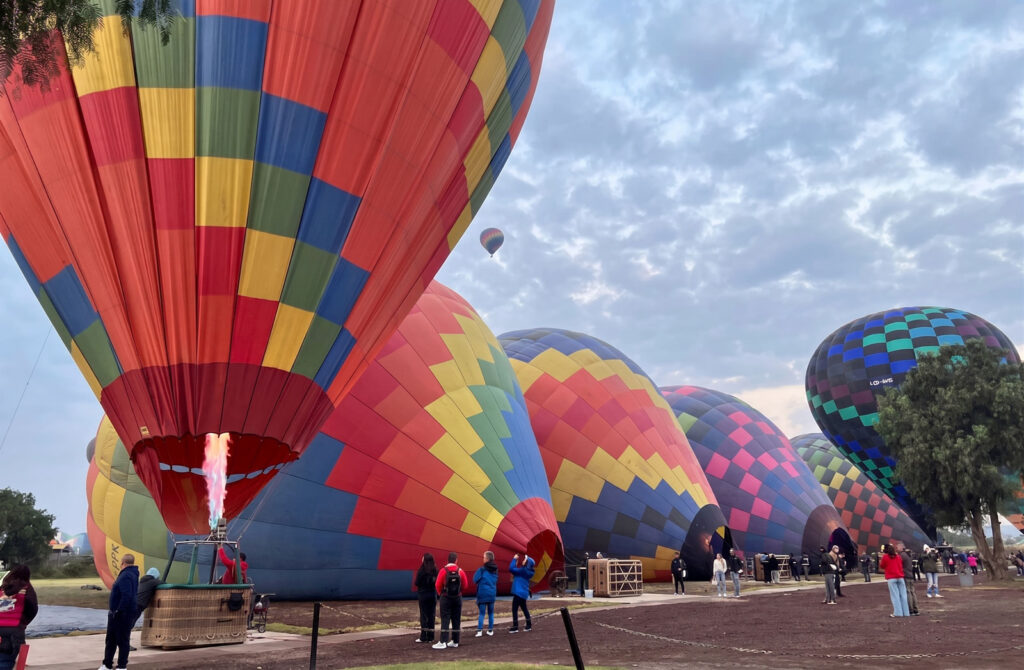
You will be taken to the launch area where the balloons are being prepared. This includes inflating the envelope, testing burners and coordinating pilots and ground crew.
This step is important because it shows how seriously the operation takes safety. A structured preparation is not just visual, it reflects maintenance routines, communication protocols and pilot coordination.
At this stage, you may also receive a short briefing about:
- Safety position during landing
- How to get in and out of the basket
- What to expect during the flight
- Weather conditions and flight duration
A professional team explains everything clearly, without rushing.
Step 3 The takeoff experience
Takeoff is usually smoother than most people expect.
The balloon lifts gently as the hot air fills the envelope. There is no sudden movement, no turbulence like in airplanes. The transition from ground to air feels calm and gradual.
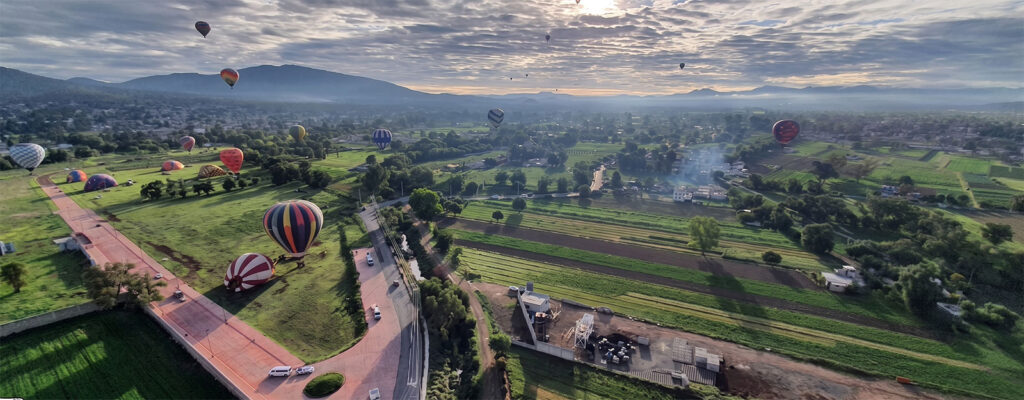
This is also where you begin to see the scale of the landscape. As you rise, the pyramids become visible from a completely different perspective.
If the operation is well executed, the takeoff feels controlled and coordinated with other balloons in the area, maintaining safe distances at all times.
Step 4 What the flight feels like in the air
Once you are in the air, the experience becomes quiet and stable.
There is no engine noise. The only sound you hear occasionally is the burner. This creates a calm environment that most first time passengers find surprising.
From above, you will see:
- The Pyramid of the Sun
- The Pyramid of the Moon
- The Avenue of the Dead
- Surrounding valleys and landscapes
The flight usually lasts between 30 to 60 minutes depending on weather conditions.
This is also where the value of choosing the right operator becomes clear. The pilot’s decisions, altitude control and route selection define the quality of the experience.
Step 5 How landing is handled
Landing is the most technical part of the experience.
A professional pilot will communicate clearly before landing, giving instructions about posture and positioning. The ground crew is already coordinated to receive the balloon.
A controlled landing does not feel abrupt. It feels planned.
This is where experience matters the most. A certified pilot understands wind behavior, terrain and timing. This is not something that can be improvised.
Step 6 What happens after the flight
After landing, you are usually transported back to the main facilities.
At this stage, the experience continues. In a structured operation, this includes:
- Breakfast or restaurant service
- Optional photos or celebration moments
- Certificate of flight
- Time to relax and reflect on the experience
This part is often underestimated, but it defines how complete the experience feels.
If you want to compare experience types, you can explore options like:
Private teotihuacan balloon experiences
Shared teotihuacan balloon flights
What makes a professional experience different step by step
Not all experiences follow this structure.
The difference is not always visible in photos or pricing. It is visible in the process:
| Step | Professional operation | Improvised operation |
| Arrival | Formal globopuerto | Open field or unclear location |
| Preparation | Coordinated and structured | Minimal or unclear |
| Takeoff | Organized and safe distances | Disorganized launches |
| Flight | Stable and guided | Limited control |
| Landing | Planned and instructed | Reactive |
| After experience | Complete and structured | Ends immediately |
This is why choosing based only on price can be misleading.
Why this step by step process matters
A hot air balloon ride is not just a moment in the air. It is a sequence of decisions and processes.
Each step reflects how seriously the company treats:
- Safety
- Logistics
- Passenger experience
- Professional standards
From my perspective, the best experiences are the ones where everything feels clear before it happens.
That is what removes uncertainty and allows you to actually enjoy the moment.
Frequently Asked Questions
Most flights begin early in the morning, usually at sunrise, because weather conditions are more stable.
The full experience can take between 3 to 5 hours including arrival, preparation, flight and post flight activities.
When operated by certified pilots and under proper conditions, both takeoff and landing are controlled and safe.
Comfortable clothing and closed shoes are recommended. Temperatures may be cooler early in the morning.
Yes. A responsible operator will reprogram the flight if conditions are not safe. This is a positive sign, not a negative one.
Yes. A shared flight includes multiple passengers, while a private flight offers a more personalized and exclusive experience.