
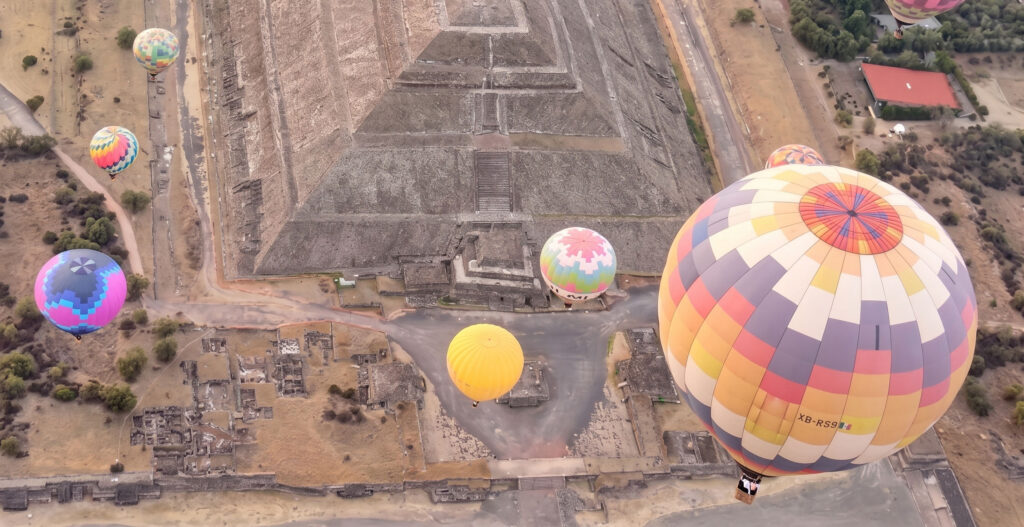
Booking a hot air balloon ride in Teotihuacan shouldn’t be just about price or availability. When someone searches for a “hot air balloon Teotihuacan” experience, they’re not just buying a tour, they’re trusting an operator with something much more valuable: their safety, their time, and a memory they want to enjoy with peace of mind.
From my perspective, that’s where the real difference lies. A balloon flight is not just about the view or a promotion. It’s about how the operation is handled before takeoff, the pilot’s experience, the condition of the equipment, and most importantly, the decisions made when conditions are not ideal.
Teotihuacán has a wide range of options. But not all operators communicate or operate at the same level of professionalism.
Is it actually safe to fly in a hot air balloon in Teotihuacán?
Yes, a hot air balloon ride can be a safe experience when it is supported by a professional operation.
Safety depends on several key factors:
- Certified pilots with valid flight licenses
- Regular inspection and maintenance of the aircraft
- Proper infrastructure and organized operations
- Responsible decision-making regarding weather conditions
The activity itself is not the problem. The real difference lies between a company that operates with strict protocols and one that improvises.
A well organized experience feels structured from the beginning. Communication is clear, conditions are explained upfront, the departure point is formal, and safety is never treated as a secondary detail.
What should you check before booking a hot air balloon ride?
| What to Check | Why It Matters | What It Says About the Company |
| Authorized operator | Reduces the risk of booking an informal service | Shows structure and accountability |
| Certified pilots | The flight depends on technical decisions | Indicates real professionalism |
| Equipment maintenance | Safety is not just about the pilot | Reflects a culture of prevention |
| Weather rescheduling policy | Flying in poor conditions is risky | Shows safety over sales pressure |
| Passenger insurance | Provides protection during the experience | Indicates responsibility |
| Proper facilities | Improves logistics and control | Shows a formal operation |
| Clear communication | Avoids misunderstandings | Reflects organized processes |
| Flight type clarity (shared vs private) | Helps you choose the right experience | Shows guidance, not just selling |
Why weather decisions are key to your safety
Many travelers see rescheduling as a negative experience. I see it the opposite way.
In a hot air balloon flight, choosing not to fly due to weather conditions is a sign of professional judgment.
Safety is not about flying every day.
It’s about flying only when conditions allow for a responsible operation.
If a company explains this clearly, it’s not just informing you — it’s filtering the right type of customer: someone who understands that a beautiful sunrise is never more important than a safe decision.
The difference between a professional operator and an informal one
A professional operator takes care of every part of the experience:
- Clear communication
- Defined processes
- Organized reception
- Recognizable facilities
- Visible safety policies
An informal operator usually focuses on closing the sale quickly, emphasizing price while saying very little about how the operation actually works.
This difference is not always obvious in advertising.
You notice it in the full experience: how they respond, what they explain, what they show, and how consistent they are between what they promise and what they deliver.
Safety vs price: what most travelers overlook
Comparing prices without comparing operations is one of the most common mistakes.
At first glance, two options may look similar because both offer a “hot air balloon ride in Teotihuacán.” But what supports that experience can be completely different.
Price alone doesn’t tell you:
- How organized the logistics are
- What level of service you’ll receive
- How the company handles weather conditions
- Whether pilots are certified
- If the operation is structured or improvised
Sometimes, choosing based only on cost leads to uncertainty, poor organization, or a disappointing experience.
What questions should you ask before booking?
Before booking, I would ask simple but revealing questions:
- “Who operates the flight directly?”
- “Do your pilots have valid flight licenses?”
- “How do you handle weather rescheduling?”
- “What kind of protection do you offer passengers?”
- “Where do flights depart from?”
- “What exactly is included in the experience?”
- “What’s the difference between shared and private flights?”
- “What safety checks are done before takeoff?”
- “Do you provide passenger insurance?”
- “What is the arrival and check-in process like?”
The answers to these questions usually tell you more than any promotion.
Shared vs private flights: which one should you choose?
This decision is not just about budget.
It’s about the type of experience you want.
- A shared flight is ideal if you’re looking for a more accessible, well-organized first experience.
- A private flight offers more control, privacy, and a more personalized atmosphere — especially for special occasions.
What really matters is choosing a company that maintains the same level of professionalism in both options.
A great experience starts before takeoff
Choosing a hot air balloon ride in Teotihuacán doesn’t start when you see the pyramids from above.
It starts before that — when you compare with criteria, evaluate the operator, and understand that safety is not an extra feature. It’s the foundation of the entire experience.
If a company communicates professionalism, works with certified pilots, operates from proper facilities, makes responsible decisions about weather, and provides a clear experience from start to finish — then you’re not just booking a flight.
You’re booking peace of mind.
Frequently Asked Questions
Yes, it can be safe when you choose a professional operator with certified pilots, maintained equipment, proper infrastructure, and responsible weather policies.
You should verify who operates the flight, pilot certifications, weather policies, insurance coverage, and whether the company operates from formal facilities.
Look for clear communication, visible processes, formal facilities, and a strong emphasis on safety over quick sales.
Because they confirm that the pilot operates under valid certification and technical standards, which is essential for safety.
Usually, it’s moved to another date. While it may seem inconvenient, it’s actually a positive sign of a safety-first operation.
Yes. Weather is one of the most important factors in deciding whether a flight should take place.
It’s reflected in logistics, communication, infrastructure, and how seriously safety is handled.
Not always. A low price doesn’t guarantee safety, organization, or service quality.
Ask about operations, certifications, weather policies, insurance, and what the experience includes.
It depends on your goals. Shared flights are more accessible; private flights offer more control and personalization.