
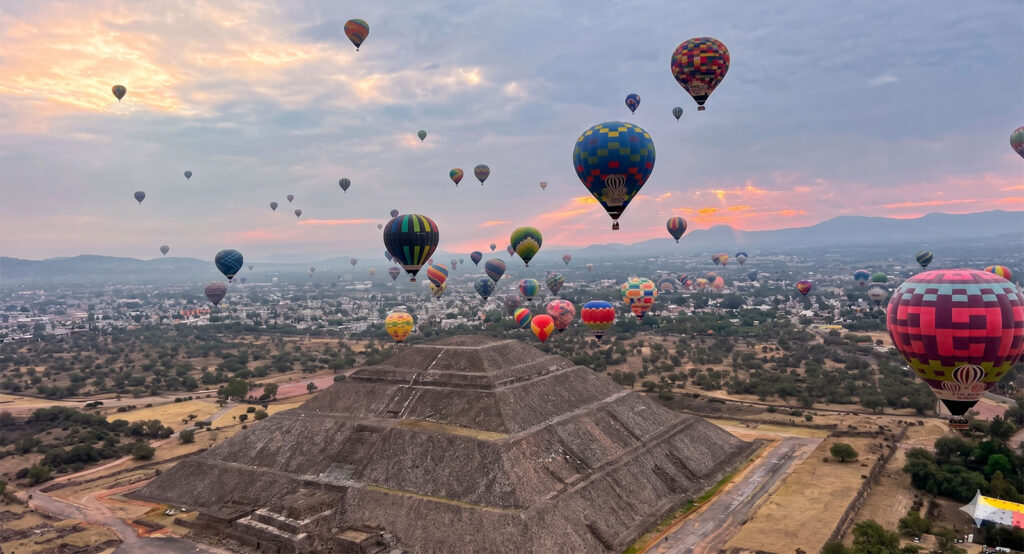
Understanding Teotihuacan is not just about walking through ancient ruins. It is about stepping into a place that once shaped an entire civilization, a city that still carries energy, symbolism, and mystery.
If you are planning to visit, especially if you are considering a “hot air balloon Teotihuacan” experience, knowing the deeper context completely transforms what you see. From the ground, you observe structures. From the air, you begin to understand a city that was designed with intention, power, and vision.
That is exactly why I always recommend exploring the historical and cultural meaning before experiencing something like a balloon flight from Teotihuacan because the perspective changes everything.
What is Teotihuacan and why is it historically important
Teotihuacan was one of the largest and most influential cities in ancient Mesoamerica. At its peak, around 100 to 600 AD, it was home to over 100,000 inhabitants, making it one of the most advanced urban centers in the world at that time.
What makes it fascinating is that its original founders are still unknown. Unlike the Aztecs or Maya, Teotihuacan left behind no clear written records explaining who they were.
Instead, they left architecture, urban planning, and symbolism.
Key historical elements
- The city was carefully planned with astronomical alignment
- It functioned as a political, economic, and religious center
- It influenced cultures across Mesoamerica
- It was already ancient when the Aztecs discovered it
The Aztecs later named it “Teotihuacan”, meaning “the place where the gods were created”
How was Teotihuacan designed and what does it represent
One of the most impressive aspects of Teotihuacan is its urban design. This was not a random settlement. It was a structured city built with symbolic meaning.
Main elements of the city
| Structure | Meaning | Function |
| Pyramid of the Sun | Cosmic energy, creation | Ceremonial and symbolic |
| Pyramid of the Moon | Balance, duality | Ritual and alignment |
| Avenue of the Dead | Spiritual pathway | Main axis of the city |
| Citadel | Power and governance | Political and religious center |
The entire city aligns with astronomical events, including solar movements. This suggests that Teotihuacan was designed not only as a city, but as a representation of the universe.
When you see it from above, especially during a Ballooning flight over Teotihuacan, you start to notice patterns that are impossible to fully appreciate from the ground.
What cultural significance does Teotihuacan still have today
Teotihuacan is not just an archaeological site. It remains a powerful cultural symbol in Mexico and for visitors worldwide.
It represents:
- The origin of civilizations in central Mexico
- A connection between humans and cosmic forces
- A legacy of engineering and urban intelligence
- A place of spiritual reflection
Even today, many visitors describe a strong emotional or symbolic connection when walking through the site.
From my perspective, this is where the experience becomes more than tourism. It becomes personal.
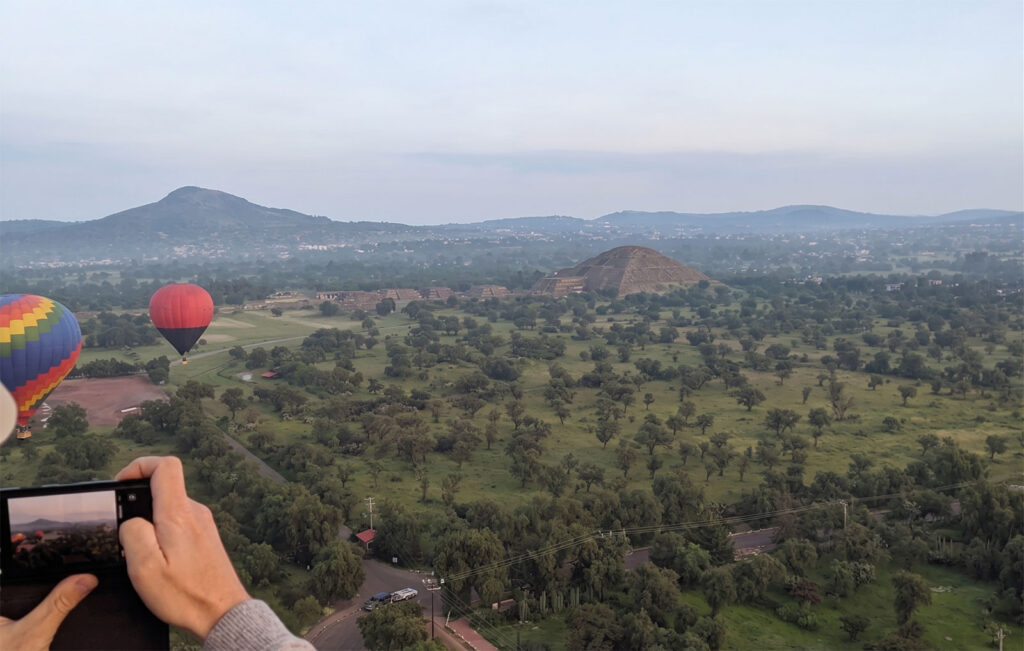
Why experiencing Teotihuacan from the air changes everything
Walking Teotihuacan gives you scale. Flying over it gives you understanding.
From above, you can clearly see:
- The geometric precision of the layout
- The alignment between structures
- The relationship between pyramids and surrounding land
- The true magnitude of the city
This is why many travelers move from simply visiting to choosing experiences like VIP Ballooning flight over Teotihuacan when they want something more meaningful and personal.
It is not just about the view. It is about context.
The connection between history and modern experiences in Teotihuacan
Today, Teotihuacan blends ancient history with carefully designed experiences that allow visitors to connect with the site in different ways.
A well-structured visit often includes:
- Early morning access for optimal lighting and visibility
- A guided understanding of the historical context
- A flight experience to appreciate the full layout
- Time to explore the pyramids on foot
If you want to understand how the full experience is structured, I recommend reviewing the complete itinerary here.
That combination is what turns a visit into a complete experience.
What most people misunderstand about Teotihuacan
One of the most common mistakes is seeing Teotihuacan as just another tourist attraction.
It is not.
It is a city that was built with intention, precision, and meaning. Every structure, every alignment, every pathway had a purpose.
Another misunderstanding is focusing only on price when choosing how to experience it. Just like with safety, context and structure matter.
That is why understanding the cultural and historical background helps you choose better, not just cheaper.
A deeper way to experience Teotihuacan
If you approach Teotihuacan with context, everything changes.
Instead of asking:
- “What am I looking at?”
You start asking:
- “Why was this built this way?”
- “What did this mean for the people who lived here?”
- “How does this connect to the experience I am having now?”
That shift is what transforms a visit into something memorable.
Frequently Asked Questions
The exact origin is unknown. It was built by a civilization that predates the Aztecs and had no written records explaining its foundation.
The Aztecs gave it this name because they believed it was the place where the gods created the universe.
It dates back to around 100 BC, with its peak between 100 and 600 AD.
They served ceremonial, religious, and symbolic purposes, often aligned with astronomical events.
Because it reflects advanced urban planning and cosmological beliefs, aligning structures with celestial movements.
The Aztecs discovered it centuries after it was abandoned and gave it its current name.
It is the main axis of the city, connecting major structures and symbolizing a spiritual path.
For its historical significance, cultural value, and unique experiences such as guided tours and hot air balloon flights.
Yes, knowing the context helps you interpret what you see and makes the visit more meaningful.
Combining historical understanding with a structured experience, including aerial perspective and guided exploration.